





If you are unsure which product is best suited to your requirements, you can contact us directly for expert guidance. Share details such as your use case, environment, compatibility needs, and budget, and we will help you select the most appropriate solution.
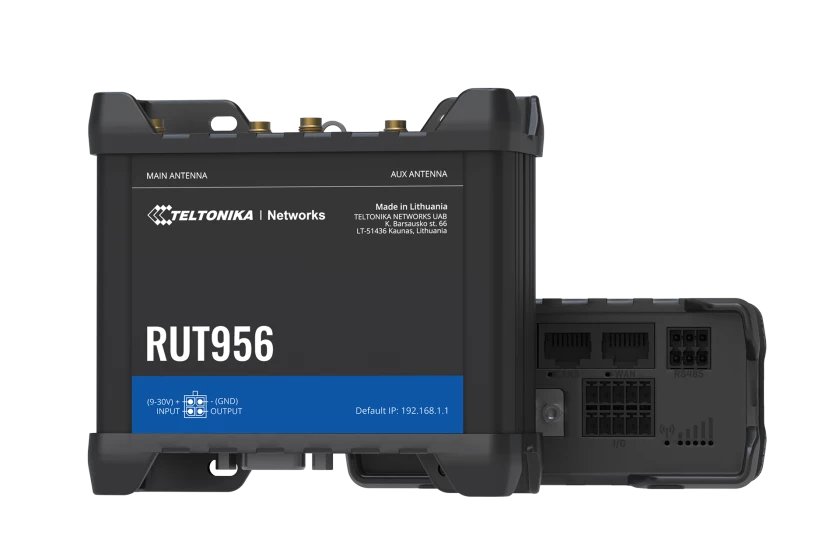

Teltonika RUT956 Industrial Cellular Router
Designed for industrial environments, the Teltonika RUT956 Industrial Cellular Router combines cellular LTE, Wi-Fi, and Ethernet to deliver reliable multi-network connectivity. Its rugged aluminium housing with IP30 protection shields against dust and debris, while MIL-STD vibration compliance ensures durability in demanding settings. The router supports dual SIM cards with auto-switching to maintain connectivity where coverage varies. Running on RutOS software, it offers detailed equipment control and event notification suited for field deployment. Certified to CE, UKCA, and FCC standards, the RUT956 is optimised for continuous industrial-duty performance requiring stable and secure network access.
Operating over a wide temperature range from -40 6C to 75 6C, the RUT956 accommodates complex setups with serial ports, I/O interfaces, and GNSS for location services. Connectivity features include advanced Wi-Fi security protocols and multiple WAN failover options that balance traffic and maintain data flows.
RUT956 Features
- 4G LTE (Cat 4), 3G, 2G
- With auto failover, backup WAN and other switching scenarios
- Ethernet, Serial (RS232, RS485) and multiple Inputs/Outputs
- Global Navigation Satellite System for location services and time synchronization
Request a Quote
Product Type
Manufacturer
Country Of Manufacture
Lithuania
Mobile module
4G LTE Cat 4 up to 150 DL/50 UL Mbps; 3G up to 21 DL/5.76 UL Mbps; 2G up to 236.8 DL/236.8 UL kbps
3GPP Release
Release 11
SIM switch
2 SIM cards, auto-switch cases: weak signal, data limit, SMS limit, roaming, no network, network denied, data connection fail, SIM idle protection
Status
IMSI, ICCID, operator, operator state, data connection state, network type, bandwidth, connected band, signal strength (RSSI), SINR, RSRP, RSRQ, EC/IO, RSCP, data sent/received, LAC, TAC, cell ID, ARFCN, UARFCN, EARFCN, MCC, and MNC
SMS
SMS status, SMS configuration, send/read SMS via HTTP POST/GET, EMAIL to SMS, SMS to EMAIL, SMS to HTTP, SMS to SMS, scheduled SMS, SMS autoreply, SMPP
USSD
Supports sending and reading Unstructured Supplementary Service Data messages
Black/White list
Operator black/white list (by country or separate operators)
Multiple PDN
Possibility to use different PDNs for multiple network access and services
Band management
Band lock, Used band status display
SIM PIN code management
SIM PIN code management enables setting, changing, or disabling the SIM card's PIN
APN
Auto APN
Bridge
Direct connection (bridge) between mobile ISP and device on LAN
Passthrough
Router assigns its mobile WAN IP address to another device on LAN
Wireless mode
802.11b/g/n (Wi-Fi 4), Access Point (AP), Station (STA)
Wi-Fi security
WPA2-Enterprise - PEAP, WPA2-PSK, WPA-EAP, WPA-PSK, WPA3-SAE, WPA3-EAP, OWE; AES-CCMP, TKIP, Auto-cipher modes, client separation, EAP-TLS with PKCS#12 certificates, disable auto-reconnect
SSID/ESSID
SSID stealth mode and access control based on MAC address
Wi-Fi users
Up to 100 simultaneous connections
Wireless Connectivity Features
Fast roaming (802.11r), Relayd, BSS transition management (802.11v), radio resource measurement (802.11k)
Wireless MAC filter
Whitelist, blacklist
Hotspot
Captive portal (hotspot), internal/external Radius server, Radius MAC authentication, SMS authorisation, SSO authentication, internal/external landing page, walled garden, user scripts, URL parameters, user groups, individual user or group limitations, user management, 9 default customisable themes and optionality to upload and download customised hotspot themes
Routing
Static routing, Dynamic routing (BGP, OSPF v2, RIP v1/v2, EIGRP, NHRP), Policy based routing
Network protocols
TCP, UDP, IPv4, IPv6, ICMP, NTP, DNS, HTTP, HTTPS, SFTP, FTP, SMTP, SSL/TLS, ARP, VRRP, PPP, PPPoE, UPNP, SSH, DHCP, Telnet, SMPP, SNMP, MQTT, Wake On Lan (WOL)
VoIP passthrough support
H.323 and SIP-alg protocol NAT helpers, allowing proper routing of VoIP packets
Connection monitoring
Ping Reboot, Wget Reboot, Periodic Reboot, LCP and ICMP for link inspection
Firewall
Port forward, traffic rules, custom rules
DHCP
Static and dynamic IP allocation, DHCP relay, DHCP server configuration, status, static leases: MAC with wildcards
QoS / Smart Queue Management (SQM)
Traffic priority queuing by source/destination, service, protocol or port, WMM, 802.11e
DDNS
Supported >25 service providers, others can be configured manually
DNS over HTTPS
DNS over HTTPS proxy enables secure DNS resolution by routing DNS queries over HTTPS
Network backup
Wi-Fi WAN, Mobile, VRRP, Wired options, each of which can be used as an automatic Failover
Load balancing
Balance Internet traffic over multiple WAN connections
SSHFS
Possibility to mount remote file system via SSH protocol
WAN
1 x WAN port 10/100 Mbps, compliance IEEE 802.3, IEEE 802.3u, 802.3az standards, supports auto MDI/MDIX
LAN
3 x LAN ports, 10/100 Mbps, compliance IEEE 802.3, IEEE 802.3u standards, supports auto MDI/MDIX
Authentication
Firewall
Pre-shared key, digital certificates, X.509 certificates, TACACS+, Internal & External RADIUS users authentication, IP & login attempts block, time-based login blocking, built-in random password generator
Attack prevention
Pre-configured firewall rules can be enabled via WebUI, unlimited firewall configuration via CLI; DMZ; NAT; NAT-T
VLAN
DDOS prevention (SYN flood protection, SSH attack prevention, HTTP/HTTPS attack prevention), port scan prevention (SYN-FIN, SYN-RST, X-mas, NULL flags, FIN scan attacks)
Mobile quota control
Port and tag-based VLAN separation
WEB filter
Mobile data limit, customizable period, start time, warning limit, phone number
Access control
Blacklist for blocking out unwanted websites, Whitelist for specifying allowed sites only
SSL certificate generation
Flexible access control of SSH, Web interface, CLI and Telnet
OpenVPN
Let's encrypt support
OpenVPN Encryption
Multiple clients and a server can run simultaneously, 27 encryption methods
IPsec
DES-CBC 64, RC2-CBC 128, DES-EDE-CBC 128, DES-EDE3-CBC 192, DESX-CBC 192, BF-CBC 128, RC2-40-CBC 40, CAST5-CBC 128, RC2-64-CBC 64, AES-128-CBC 128, AES-128-CFB 128, AES-128-CFB1 128, AES-128-CFB8 128, AES-128-OFB 128, AES-128-GCM 128, AES-192-CFB 192, AES-192-CFB1 192, AES-192-CFB8 192, AES-192-OFB 192, AES-192-CBC 192, AES-192-GCM 192, AES-256-GCM 256, AES-256-CFB 256, AES-256-CFB1 256, AES-256-CFB8 256, AES-256-OFB 256, AES-256-CBC 256
GRE
XFRM, IKEv1, IKEv2, with 14 encryption methods for IPsec (3DES, DES, AES128, AES192, AES256, AES128GCM8, AES192GCM8, AES256GCM8, AES128GCM12, AES192GCM12, AES256GCM12, AES128GCM16, AES192GCM16, AES256GCM16)
PPTP, L2TP
GRE tunnel, GRE tunnel over IPsec support
Stunnel
Client/Server instances can run simultaneously, L2TPv3, L2TP over IPsec support
DMVPN
Proxy designed to add TLS encryption functionality to existing clients and servers without any changes in the program’s code
SSTP
Method of building scalable IPsec VPNs
ZeroTier
SSTP client instance support
WireGuard
ZeroTier VPN client support
Tinc
WireGuard VPN client and server support
Supported modes
Tinc offers encryption, authentication and compression in it's tunnels. Client and server support.
Supported connection types
Router
Supported modes
RS485, TCP
Supported connection types
Client, Server
Supported modes
TCP
Supported connection types
Server, Client
Custom registers
RTU (RS232, RS485), TCP, USB
Supported data formats
MODBUS TCP custom register block requests, which read/write to a file inside the router, and can be used to extend MODBUS TCP Client functionality
Protocol
8-bit: INT, UINT; 16-bit: INT, UINT (MSB or LSB first); 32-bit: float, INT, UINT (ABCD (big-endian), DCBA (little-endian), CDAB, BADC), HEX, ASCII
Modbus MQTT Gateway
HTTP(S), MQTT, Azure MQTT, Kinesis
Supported modes
Allows sending commands and receiving data from MODBUS Server through MQTT broker
Supported connection types
Station, Outstation
DLMS Support
RS232, RS485, TCP, USB
Supported modes
DLMS - standard protocol for utility meter data exchange
Supported connection types
Client
Teltonika Networks Web API (beta) support
RS232, RS485, TCP
WEB UI
Expand your device's possibilities by using a set of configurable API endpoints to retrieve or change data. For more information, please refer to this documentation: https://developers.teltonika-networks.com
FOTA
HTTP/HTTPS, status, configuration, FW update, CLI, troubleshoot, multiple event log servers, firmware update availability notifications, event log, system log, kernel log, Internet status
SSH
Firmware update from server, automatic notification
SMS
SSH (v1, v2)
Call
SMS status, SMS configuration, send/read SMS via HTTP POST/GET
TR-069
Reboot, Status, Mobile data on/off, Output on/off, answer/hang-up with a timer, Wi-Fi on/off
MQTT
OpenACS, EasyCwmp, ACSLite, tGem, LibreACS, GenieACS, FreeACS, LibCWMP, Friendly tech, AVSystem
SNMP
MQTT Broker, MQTT publisher
JSON-RPC
SNMP (v1, v2, v3), SNMP Trap, Brute force protection
RMS
Management API over HTTP/HTTPS
ThingWorx
Teltonika Remote Management System (RMS)
Cumulocity - Cloud of Things
Allows monitoring of: WAN Type, WAN IP, Mobile Operator Name, Mobile Signal Strength, Mobile Network Type
Azure IoT Hub
Allows monitoring of: Device Model, Revision and Serial Number, WAN Type and IP, Mobile Cell ID, ICCID, IMEI, Connection Type, Operator, Signal Strength. Has reboot and firmware upgrade actions.
CPU
Can be configured with Data to Server to send all the available parameters to the cloud. Has Direct method support which allows to execute RutOS API calls on the IoT Hub. Also has Plug and Play integration with Device Provisioning Service that allows zero-touch device provisioning to IoT Hubs
RAM
Mediatek, 580 MHz, MIPS 24KEc
FLASH storage
128 MB, DDR2
WEB UI
16 MB, SPI Flash
FOTA
Update FW from file, check FW on server, configuration profiles, configuration backup
RMS
Update FW
Keep settings
Update FW/configuration for multiple devices at once
Factory settings reset
Update FW without losing current configuration
Operating system
A full factory reset restores all system settings, including the IP address, PIN, and user data to the default manufacturer's configuration
Supported languages
RutOS (OpenWrt based Linux OS)
Development tools
Busybox shell, Lua, C, C++
GPL customization
SDK package with build environment provided
Package Manager
You can create your own custom, branded firmware and web page application by changing colours, logos, and other elements in our firmware to fit your or your clients’ needs
GNSS
The Package Manager is a service used to install additional software on the device
Coordinates
GPS, GLONASS, BeiDou, Galileo and QZSS
NMEA
GNSS coordinates via WebUI, SMS, TAVL, RMS
NTRIP
NMEA 0183
Server software
NTRIP protocol (Networked Transport of RTCM via Internet Protocol)
Geofencing
Supported server software TAVL, RMS
RS232
Configurable multiple geofence zones
RS485
DB9 connector, RS232 (with RTS, CTS flow control)
Serial functions
RS485 Full Duplex (4 wires) and Half Duplex (2 wires). 300-115200 baud rate
Data rate
Console, Serial over IP, Modem, MODBUS gateway, NTRIP Client
Applications
USB 2.0
External devices
Samba share, USB-to-serial
Storage formats
Possibility to connect external HDD, flash drive, additional modem, printer, USB-serial adapter
Input
FAT, FAT32, exFAT, NTFS (read-only), ext2, ext3, ext4
Output
1 x digital dry input (0 - 3 V), 1 x digital galvanically isolated input (0 - 30 V), 1 x analog input (0 - 24 V), 1 x Digital non-isolated input (on 4-pin power connector, 0 - 5 V detected as logic low, 8 - 30 V detected as logic high)
Events
1 x digital open collector output (30 V, 250 mA), 1 x SPST relay output (40 V, 4 A), 1 x Digital open collector output (30 V, 300 mA, on 4-pin power connector)
I/O juggler
Email, RMS, SMS
Physical size
Allows to set certain I/O conditions to initiate event
Applications
Micro SD (internal)
Capacity
Samba share, Storage Memory Expansion, DLNA
Storage Formats
Up to 64 GB
Connector
FAT32, NTFS, ext2, ext3, ext4
Input voltage range
4-pin industrial DC power socket
PoE (passive)
9 – 30 VDC, reverse polarity protection; surge protection >31 VDC 10us max
Power consumption
Passive PoE over spare pairs. Possibility to power up through LAN1 port, not compatible with IEEE802.3af, 802.3at and 802.3bt standards, Mode B, 9 - 30 VDC
Ethernet
< 2 W idle, < 7 W Max
I/O’s
4 x RJ45 ports, 10/100 Mbps
Status LEDs
2 x Inputs and 2 x Outputs on 10-pin industrial socket, 1 x Digital input and 1 x Digital output on 4-pin power connector (available from HW revision 1600)
SIM
1 x Bi-color connection status, 5 x Mobile connection strength, 4 x ETH status, 1 x Power
Power
2 x SIM slots (Mini SIM - 2FF), 1.8 V/3 V, external SIM holders, eSIM (Optional)
Input/output
1 x 4-pin power connector
Antennas
1 x 10-pin industrial socket for inputs/outputs
USB
2 x SMA for LTE, 2 x RP-SMA for Wi-Fi, 1 x SMA for GNSS
RS232
1 x USB A port for external devices
RS485
1 x DB9 socket
Reset
1 x 6-pin industrial socket
Casing material
Reboot/User default reset/Factory reset button
Dimensions (W x H x D)
Aluminium housing, plastic panels
Weight
110 x 50 x 100 mm
Mounting options
287 g
Operating temperature
DIN rail, wall mount, flat surface (all require additional kit)
Operating humidity
-40 °C to 75 °C
Ingress Protection Rating
10% to 90% non-condensing
Regulatory
IP30
Operator
CE, UKCA, ANRT, Kenya, CITC, ICASA, FCC, IC, PTCRB, Anatel, RCM, Giteki, IMDA, ECE R118, E-mark, UL/CSA Safety, CB, RoHS, REACH, NCC, C1D2
Standards
AT&T, Verizon, T-Mobile
ESD
EN 55032:2015 + A11:2020EN 55035:2017 + A11:2020EN IEC 61000-3-2:2019 + A1:2021EN 61000-3-3:2013 + A1:2019EN 301 489-1 V2.2.3EN 301 489-17 V3.2.4EN 301 489-19 V2.1.1EN 301 489-52 V1.2.1
Radiated Immunity
EN 61000-4-2:2009
EFT
EN 61000-4-3:2020
Surge Immunity (AC Mains Power Port)
EN 61000-4-4:2012
CS
EN 61000-4-5:2014 + A1:2017
DIP
EN 61000-4-6:2014
Standards
EN 61000-4-11:2020
Standards
EN 300 328 V2.2.2EN 301 511 V12.5.1EN 301 908-1 V15.2.1EN 301 908-2 V13.1.1EN 301 908-13 V13.2.1EN 303 413 V1.1.1
Standards
CE: EN IEC 62368-1:2020 + A11:2020, EN IEC 62311:2020, EN 50665:2017RCM: AS/NZS 62368.1:2022CB: IEC 62368-1:2018UL/CSA Safety: UL 62368-1 (3rd Ed., Rev. December 13, 2019), C22.2 No. 62368-1:19 (3rd Ed., Rev. December 13, 2019)
Hazardous Environments
UL/CSA Safety: UL 121201, 9th Ed., Rev. April 1, 2021, CAN/CSA C22.2 No. 213, 3rd Ed. April 2021
The Teltonika RUT956 Industrial Cellular Router is designed and engineered for use in demanding environments where reliability, durability are essential. The RUT956 supports a wide range of industries and operational applications.
Common deployment industries include: Defence And Military, Energy and Utilities, Industrial Manufacturing, Logistics And Supply Chain, Marine And Offshore, Natural Resources and Mining, Oil and Gas, Rail And Transport.
Across these sectors, the RUT956 is typically used in applications such as Asset Tracking And Management, Fleet Management And Telematics, Industrial HMI And Machine Interfacing, Process Control And Shop-Floor Monitoring, Route Planning And Navigation, SCADA And Control-Room Access, Secure Communications And Command-And-Control, Vehicle-Mounted Computing (MDTs / VMCs).
These examples demonstrate the versatility of the RUT956 across both industry sectors and real-world operational use cases. Its suitability extends well beyond the scenarios listed above, making it a flexible solution for a broad range of requirements.
For further information, or to assess whether the RUT956 is appropriate for your specific application, please contact us.
The Teltonika RUT956 Industrial Cellular Router comes with a 24 Month Limited Warrany against defects in workmanship and materials, effective from the date of shipment (unless otherwise agreed in writing).
To receive service under this warranty, the eligible product, Teltonika RUT956 Industrial Cellular Router, must be presented to RUGGED in the United Kingdom.
For more information about the Teltonika RUT956 Industrial Cellular Router or to arrange repairs and services not covered by the warranty, please visit the warranty section on our website.
Do you need further details about the Teltonika RUT956 Industrial Cellular Router or require a custom solution or demonstration?
At RUGGED, we recognise that every project has its own unique demands. If you have any questions about the Teltonika RUT956 or need a custom Cellular Router solution designed specifically for you, our team of technical experts are ready to assist you.
Alternative Products
Discover a range of alternatives that offer comparable features and quality to the product you’re viewing.
Our selection of similar items provides diverse options, allowing you to explore different designs, functionalities, and styles tailored to your preferences. Each product has been carefully chosen to ensure it meets the high standards you expect, enabling you to make a well-informed decision based on your unique requirements.
Browse through our related products and find the perfect match that complements your choice seamlessly.
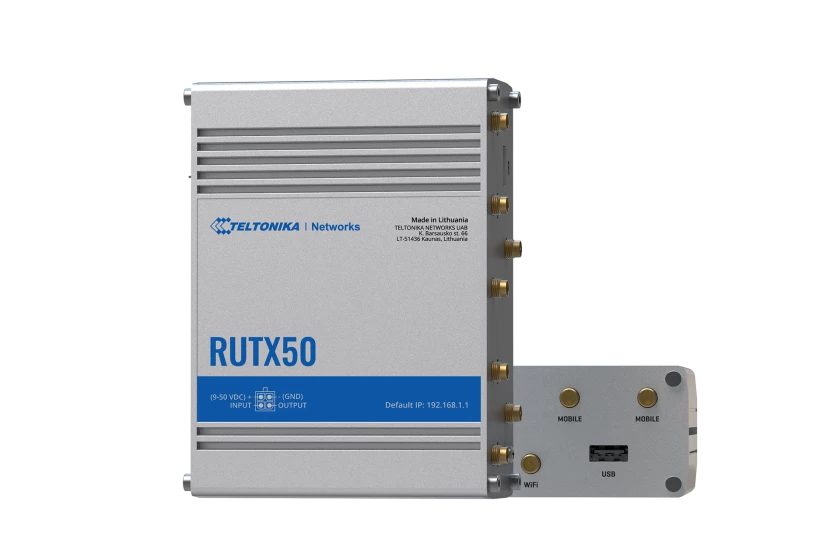
- 5G Sub-6 GHz with 4G/3G fallback
- Rugged aluminium chassis with IP30 and MIL-STD compliance
- Dual SIM auto-switching for uninterrupted connectivity
- Advanced firewall and VPN protocols
- Dual SIM auto-switching for continuous connectivity
- Rugged aluminium housing with wide temperature range
- -40 °C to 75 °C
- Advanced VPN support including OpenVPN and WireGuard
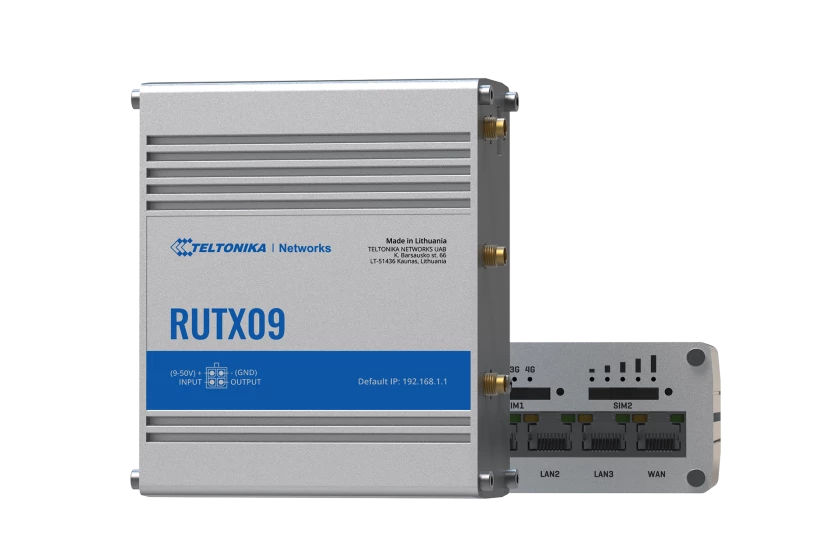
- Dual LTE Cat 6 modems with load balancing
- IP30 industrial-grade aluminium casing
- Advanced VPN support including WireGuard
- Wide temperature range -40°C to 75°C
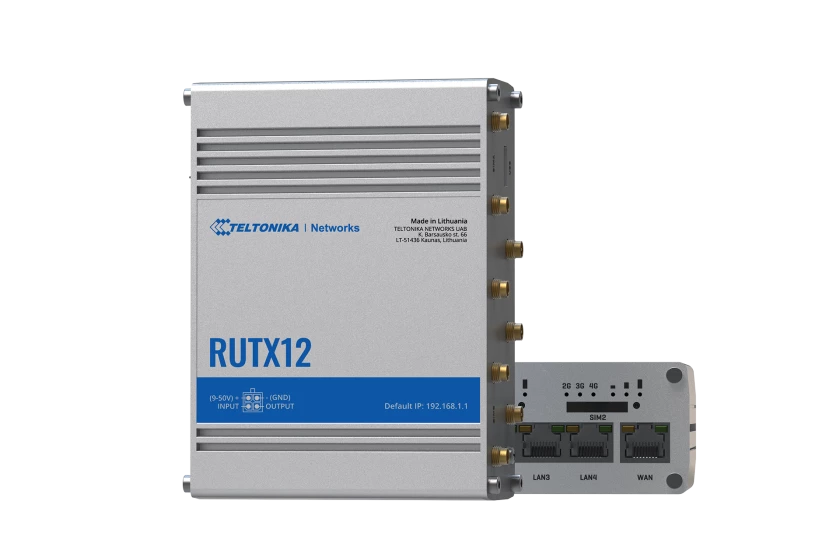
- Dual SIM automatic failover
- 4G LTE Cat 6 up to 300 Mbps
- Reinforced anodised aluminium housing
- MIL-STD-810G vibration and shock tested
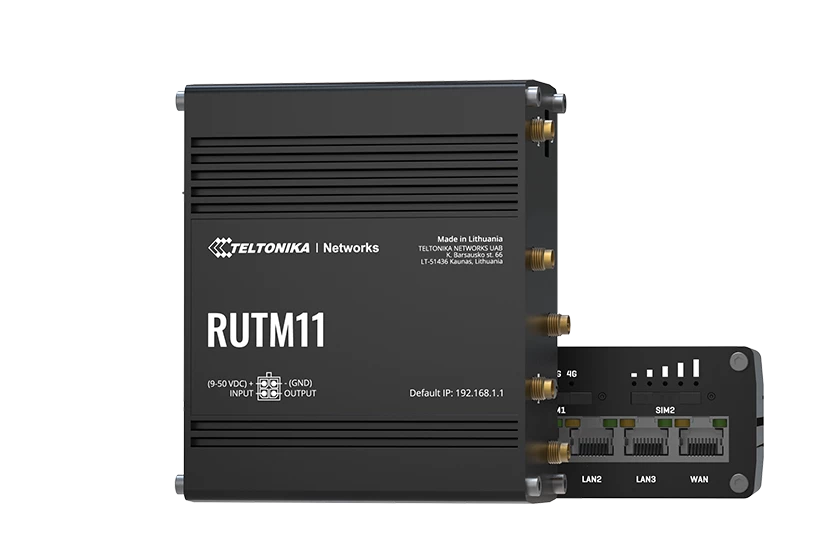
Having trouble finding what you're looking for?
Selecting the right product for your specific application and environment can be quite challenging. At Rugged, our team of experts is on hand to assist you in making the best choice. Whether you have questions about product specifications or require guidance through our range of solutions, we’re here to help.
With our extensive industry knowledge and commitment to quality, we can ensure you find the ideal solution tailored to your needs.
Frequently Asked Questions
RUGGED offers free technical support for the lifetime of products you purchase. This includes help with setup, troubleshooting, and integration. Support is available online or directly from the technical team
Ensuring a
Secure Cellular Router
connection is a priority for Rugged Limited. Our cellular routers incorporate a hardened OpenWrt operating system, which is based on Linux and specifically designed to prevent unauthorised access and maintain network integrity. This operating system helps to protect against many common vulnerabilities, offering a strong foundation for your network security.
Furthermore, our routers are equipped with advanced security protocols such as IPsec, OpenVPN, GRE, and WireGuard. These protocols create secure tunnels for data transmission, encrypting your data and safeguarding it from interception. The combination of a secure operating system and comprehensive VPN support makes Rugged Limited cellular routers a reliable choice for maintaining a robust and secure cellular router setup within various industrial and commercial applications.
Rugged Limited provides industrial-grade cellular routers that are designed for robust remote management capabilities. This feature is crucial for applications where physical access to the device might be limited or impractical, ensuring continuous network operation and streamlined maintenance.
Our managed cellular router solutions allow for over-the-air updates, configuration changes, and performance monitoring from a central location. This means you can keep your network secure and efficient without needing to send technicians to remote sites. The ability to remotely diagnose and resolve issues significantly reduces operational costs and potential downtime.
These capabilities extend to various aspects of router management, including:
- Firmware updates to ensure security and access to the latest features.
- Configuration management for network settings and profiles.
- Real-time performance monitoring to track data usage, signal strength, and device health.
- Troubleshooting and diagnostics to quickly identify and address connectivity issues.
By leveraging a managed cellular router from Rugged Limited, businesses can ensure reliable and resilient connectivity across their distributed infrastructure.
A vehicle cellular router is engineered to provide robust and reliable internet connectivity in mobile settings, such as cars, lorries, and public transport. These devices are built to tolerate wide temperature ranges, vibrations, and voltage fluctuations commonly encountered in vehicles, ensuring consistent performance on the move.
Rugged Limited offers a range of industrial cellular routers that are well-suited for vehicular deployment. These routers often feature multiple WAN options, including cellular and Wi-Fi, allowing for seamless failover and load balancing to maintain an uninterrupted connection. Their compact design and flexible mounting options make them easy to integrate into diverse vehicle types.
For more information on suitable router solutions, explore the options available for rugged routers engineered for demanding applications, including those in vehicles. The ability of a vehicle cellular router to establish highly secure connections through VPN tunnelling, combined with GPS functionality, makes them invaluable for fleet management, real-time tracking, and in-vehicle entertainment systems.
Cellular routers are essential for maintaining continuous connectivity in numerous sectors where traditional wired infrastructure may be impractical or unreliable. The Cellular Router Industries include, but are not limited to, public safety, transportation, utilities, and agriculture.
For instance, in public safety, cellular routers enable first responders to access critical data and communicate effectively in emergency situations, often in remote or disaster-stricken areas. Within the transportation sector, they provide connectivity for fleet management, real-time tracking, and passenger Wi-Fi on buses and trains. Utility companies utilise these routers for smart grid management, remote monitoring of infrastructure, and data collection from distributed assets. In agriculture, cellular routers support precision farming techniques, connecting sensors and automated machinery to optimise operations and monitor crop health.
Rugged Limited provides a range of robust and reliable rugged routers designed to meet the demands of these diverse applications, ensuring consistent performance even in harsh conditions. Our solutions cater to the specific needs of various Cellular Router Industries, offering secure and stable network access for mission-critical operations.
External antenna support is a common and often crucial feature for many cellular routers, including those offered by Rugged Limited. The ability to connect external Cellular Router Antennas allows for significant improvements in signal strength, reliability, and overall network performance, especially in challenging environments or areas with weak cellular coverage.
By utilising external antennas, users can position the antenna in an optimal location for signal reception, such as outdoors or elevated, ensuring a stronger connection to the cellular network. This is particularly beneficial for industrial applications, remote deployments, or vehicles where maintaining a consistent and robust cellular connection is paramount.
For a range of cellular routers designed with such capabilities, you can explore Rugged Limited’s selection at rugged routers. Investing in appropriate external Cellular Router Antennas can dramatically enhance the effectiveness of your cellular router setup, leading to more stable data transmission and improved operational efficiency.
Understanding the cellular router vs modem difference is crucial for effective network setup. A cellular modem functions similarly to a traditional broadband modem, acting as a gateway to connect a single device to the internet via a cellular network. It modulates and demodulates signals, converting cellular data into a format that a computer or other device can understand, essentially providing raw internet access.
A cellular router, on the other hand, builds upon the modem’s capabilities. It incorporates a cellular modem but adds routing functionalities. This means a cellular router can share the internet connection from the cellular network with multiple devices simultaneously, much like a wired router shares a broadband connection. Beyond simply sharing, cellular routers offer advanced networking features such as Wi-Fi broadcasting, multiple Ethernet ports, VPN support, firewall protection, and sometimes even failover capabilities, allowing for seamless switching between different internet sources if one fails. Therefore, while a modem provides the internet connection, a router manages and distributes that connection to an entire network of devices, offering greater versatility and control. When considering a cellular router vs modem, the router provides a more comprehensive networking solution for multiple users and devices.
Cellular routers are indeed highly suitable for IoT deployments due to their ability to provide robust and flexible connectivity in diverse environments. Many IoT applications require reliable internet access in locations where wired connections are impractical or unavailable, and this is where an IoT cellular router excels. They offer seamless communication for devices collecting and transmitting data, from remote sensors to smart city infrastructure.
Rugged Limited offers a range of industrial cellular routers that are specifically designed to withstand challenging conditions often encountered in IoT deployments. These routers ensure continuous operation and secure data transmission, which are critical for the efficiency and integrity of any IoT system. The robust nature of these devices makes them an ideal choice for ensuring consistent connectivity for your IoT solutions.
Understanding how cellular routers work is crucial for optimising network connectivity in various environments. At its core, a cellular router functions by taking a cellular signal (3G, 4G, or 5G) and translating it into an ethernet or Wi-Fi signal, enabling devices to connect to the internet. This process is similar to how your smartphone can create a personal hotspot, but rugged cellular routers are engineered for greater durability, higher performance, and continuous operation in demanding conditions.
These routers typically feature one or more integrated cellular modules, allowing them to connect to cellular networks using a SIM card, much like a mobile phone. Once connected, they can establish a secure and stable internet connection. Many Rugged Limited cellular routers are designed with industrial-grade components, ensuring they can withstand extreme temperatures, vibrations, and other environmental challenges, making them ideal for applications such as transportation, remote monitoring, and industrial automation. This robust design is a key aspect of how cellular routers work effectively in challenging scenarios, providing uninterrupted internet access where traditional broadband is unavailable or unreliable. Explore our range of rugged routers for reliable cellular connectivity solutions.