







If you are unsure which product is best suited to your requirements, you can contact us directly for expert guidance. Share details such as your use case, environment, compatibility needs, and budget, and we will help you select the most appropriate solution.
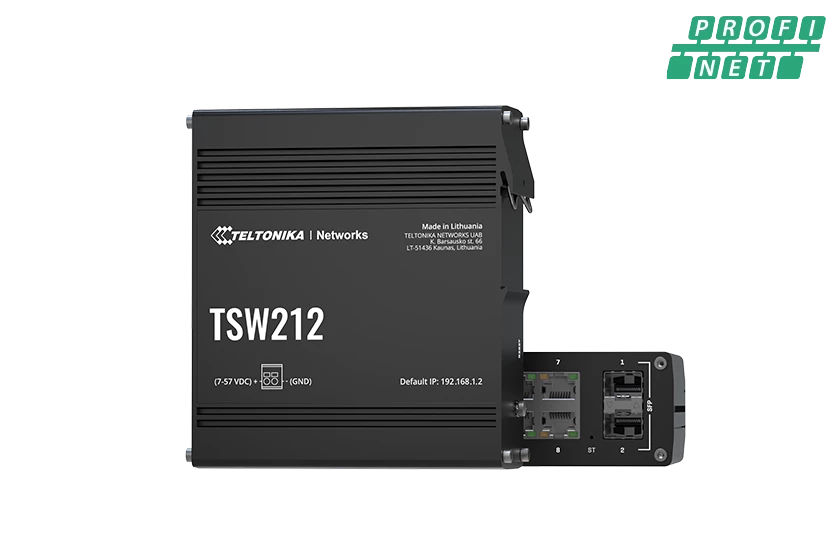

Teltonika TSW212 Managed Ethernet Switch
Designed for industrial networking environments, the Teltonika TSW212 Managed Ethernet Switch provides reliable and secure connectivity with eight Gigabit Ethernet ports and two SFP fibre optic interfaces. Its robust multi-layer switching capabilities include L2 management and essential L3 features like DHCPv6 client support and static IPv6 routing, enabling seamless integration with protocols such as EtherNet/IP, PROFINET class B, and MRP. The switch’s anodized aluminium housing ensures rugged durability and impact resistance, backed by an IP30 ingress protection rating which guards against dust ingress.
Operating across a temperature range from -40°C to 75°C and supporting a wide input voltage range of 7 to 57 VDC, the TSW212 is suited for continuous-duty industrial deployments. Advanced network management such as VLAN, STP/RSTP, and port-based QoS prioritisation enhances operational control and stability. Compliance with electromagnetic standards EN 55032, EN 55035, and IEC 61000 series ensures consistent performance in demanding electromagnetic environments.
TSW212 Features
- L2 with additional L3 features for advanced management capabilities
- Supports PROFINET for automated data processing alongside other protocols, like EtherNet/IP and MRP
- 8 x Gigabit Ethernet ports and 2 x SFP ports for fibre optic communication
- Teltonika Networks OS for switches, intuitively designed for infinite configurations
Request a Quote
Product Type
Manufacturer
Certifications & Standards
Ruggedness
Mounting Format
Country Of Manufacture
Lithuania
ETH
Multi-layer managed 8 x ETH ports, 10/100/1000 Mbps supports auto MDI/MDIX crossover
Fibre
2 x SFP ports
IEEE 802.3 series standards
802.3i, 802.3u, 802.3ab, 802.3x, 802.3z
EtherNet/IP
Yes
PROFINET (class B)
Yes
SNMP V2, V3
Yes
LLDP
Yes
Network Management
802.1p class of service, 802.1x port-based network access control, 802.1Q VLAN
MRP
MRP client role, MRP manager role
L2 features
Loop protection, Forwarding table, VLAN, STP/RSTP
DHCP
DHCP server, DHCP client, DHCP static leases capable of using MAC with wildcards
Port Settings
Enable/disable, link speed control, port isolation, EEE (802.3az) management, Port Mirroring
L3 Features
Static IPv4 routing, static IPv6 routing, DHCPv6 client, static IPv6 address
Authentication
PAM — preshared key, Radius & TACACS+, IP & login attempts block
QOS
Port priority, DSCP priority, 802.1p priority, TOS
Scheduling method
SP/WFQ/WRR
Bandwidth control
Rate limiting, storm control
Traffic Shaper
Port-based shaping
Tools
Cable diagnostic, ping, traceroute, nslookup
Teltonika Networks Web API (beta) support
Expand your device's possibilities by using a set of configurable API endpoints to retrieve or change data. For more information, please refer to this documentation: https://developers.teltonika-networks.com
RAM
128MB, DDR3
FLASH storage
16 MB serial flash
WEB UI
Update FW from file, check FW on server, configuration profiles, configuration backup
FOTA
Update FW
RMS
Update FW/configuration for multiple devices at once
Keep settings
Update FW without losing current configuration
Operating system
TSWOS (OpenWrt based Linux OS)
Supported languages
Busybox shell, Lua, C, C++
Development tools
SDK package with build environment provided
Bandwidth (Non-blocking)
20 Gbps
Forwarding rate
14.88 Mpps
Packet buffer
512 KB
MAC address table size
8K entries
Jumbo frame support
10000 bytes
Connector
2-pin industrial DC power socket
Input voltage range
7 – 57 VDC
Power consumption
Idle: < 2.5 W / Max: 6 W
Ethernet
8 x RJ45 ports, 10/100/1000 Mbps
Fibre
2 x SFP ports
Status LEDs
1 x Power LED, 1 x Aux LED, 16 x ETH status LEDs, 2 x SFP status LEDs
Power
1 x 2-pin industrial DC power socket
Reset
Software reset button
Other
1 x Grounding screw
Casing material
Anodized aluminum housing and panels
Dimensions (W x H x D)
132 x 44.2 x 122.2 mm
Weight
615 g
Mounting options
Integrated DIN rail bracket, wall mount, flat surface (additional kit needed)
Operating temperature
-40 °C to 75 °C
Operating humidity
5% to 95% non-condensing
Ingress Protection Rating
IP30
Regulatory
CE, UKCA, RCM, ANRT, FCC, IC, CB, WEEE, RoHS, REACH, SDPPI (POSTEL)
Standards
EN 55032:2015 + A11:2020 + A1:2020 EN 55035:2017 + A11:2020 EN IEC 61000-3-2: 2019 + A1:2021 EN 61000-3-3: 2013 + A1:2019 + A2:2021
ESD
EN 61000-4-2:2009
Radiated Immunity
EN IEC 61000-4-3:2020
EFT
EN 61000-4-4:2012
Surge Immunity (AC Mains Power Port)
EN 61000-4-5:2014 + A1:2017
CS
EN 61000-4-6:2014
DIP
EN 61000-4-11:2020
Standards
CE: EN IEC 62368-1:2020 + A11:2020RCM: AS/NZS 62368.1:2022CB: IEC 62368-1:2018
The Teltonika TSW212 Managed Ethernet Switch is designed and engineered for use in demanding environments where reliability, durability are essential. The TSW212 supports a wide range of industries and operational applications.
Common deployment industries include: Construction, Energy and Utilities, Industrial Manufacturing, Logistics And Supply Chain, Marine And Offshore, Oil and Gas, Rail And Transport, Security And Surveillance.
Across these sectors, the TSW212 is typically used in applications such as Industrial HMI And Machine Interfacing, Port, Terminal, And Cargo Handling, Process Control And Shop-Floor Monitoring, Rail Operations And Wayside Maintenance, SCADA And Control-Room Access, Secure Communications And Command-And-Control, Security And Surveillance Operations, Utilities Inspection And Meter Reading.
These examples demonstrate the versatility of the TSW212 across both industry sectors and real-world operational use cases. Its suitability extends well beyond the scenarios listed above, making it a flexible solution for a broad range of requirements.
For further information, or to assess whether the TSW212 is appropriate for your specific application, please contact us.
The Teltonika TSW212 Managed Ethernet Switch comes with a 24 Month Limited Warrany against defects in workmanship and materials, effective from the date of shipment (unless otherwise agreed in writing).
To receive service under this warranty, the eligible product, Teltonika TSW212 Managed Ethernet Switch, must be presented to RUGGED in the United Kingdom.
For more information about the Teltonika TSW212 Managed Ethernet Switch or to arrange repairs and services not covered by the warranty, please visit the warranty section on our website.
Do you need further details about the Teltonika TSW212 Managed Ethernet Switch, or would you like to discuss a customised solution or demonstration?
At RUGGED, we recognise that every project has its own unique demands. If you have any questions about the Teltonika TSW212 or need a custom Ethernet Switch solution designed specifically for you, our team of technical experts are ready to assist you.
Alternative Products
Explore alternative products offering comparable features, performance, and build quality to the model you are currently viewing.
Our related solutions provide variations in configuration, functionality, and form factor to suit different application requirements. Each option has been selected to meet the same high standards of reliability and performance.
Browse the related products below to identify the most suitable fit for your deployment.
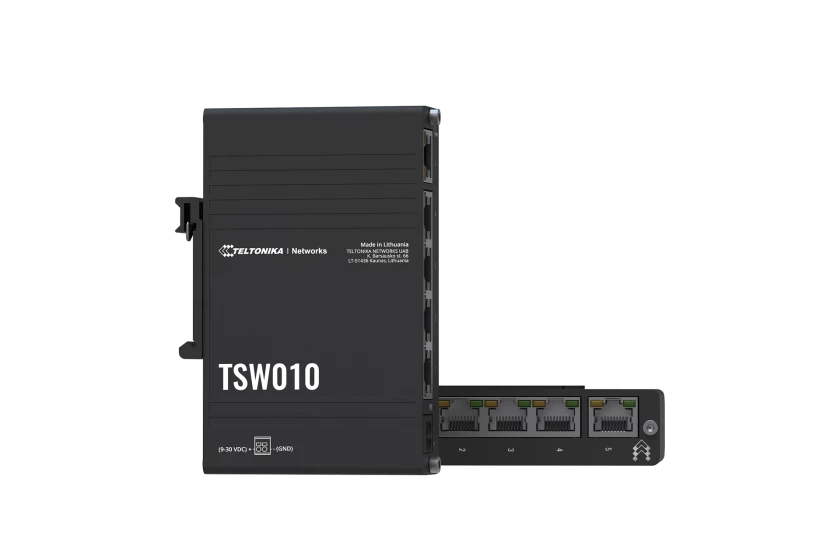
- Compact flat form factor with DIN rail mounting
- Wide 7-57 VDC input with surge protection
- Anodized aluminium housing for durability
- Five 10/100 Mbps RJ45 ports with auto MDI/MDIX
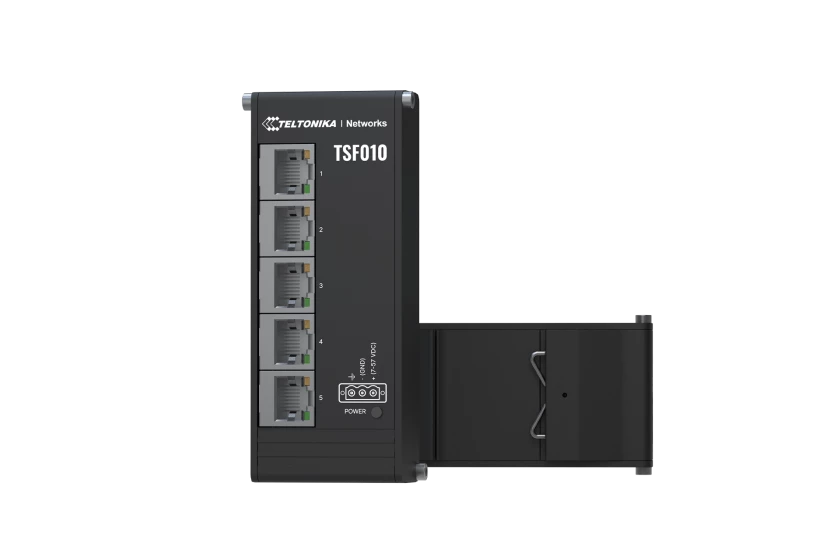
- Compact aluminium DIN rail design
- Passive PoE via ETH1 port
- Wide temperature range -40 °C to 75 °C
- Compliance with EMI and surge immunity standards
- Eight Gigabit Ethernet ports with SFP fibre interfaces
- Anodized aluminium rugged housing with IP30 rating
- Supports EtherNet/IP and PROFINET class B protocols
- Wide operating temperature -40°C to 75°C
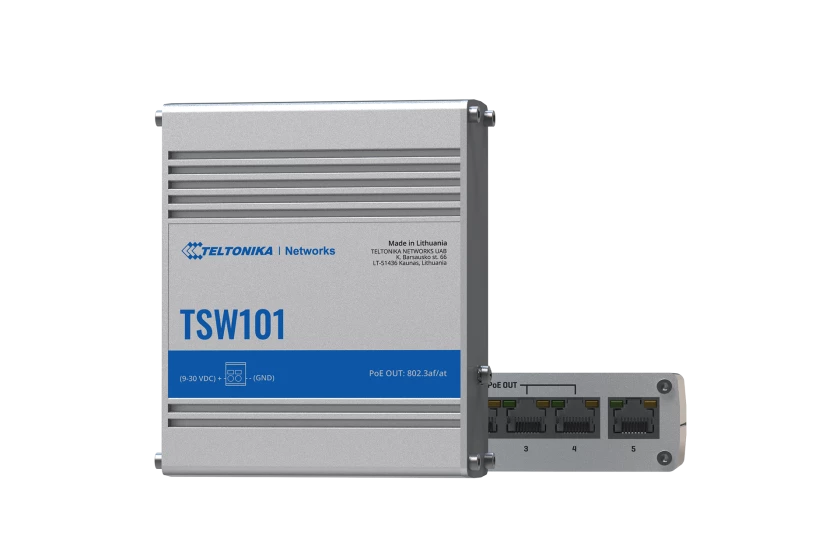
- Rugged aluminium housing
- Wide 9-30 VDC input voltage
- Five Gigabit Ethernet ports with PoE+
- Operating range -40 to +75 6C
Having trouble finding what you're looking for?
Selecting the correct solution for your specific application and operating environment requires careful consideration.
At Rugged, our engineering and product specialists can advise on specifications, environmental suitability, mounting requirements, connectivity, and lifecycle planning to ensure the right fit for your deployment.
With extensive industry experience and a focus on reliability and performance, we help you select a solution aligned with your operational requirements.
Frequently Asked Questions
RUGGED offers free technical support for the lifetime of products you purchase. This includes help with setup, troubleshooting, and integration. Support is available online or directly from the technical team
An Unmanaged Ethernet Switch is a straightforward networking device that allows multiple Ethernet devices to communicate with each other on a local area network (LAN). Unlike managed switches, an Unmanaged Ethernet Switch operates without any user intervention or setup; you simply plug in your devices, and it starts working immediately. This plug-and-play functionality makes them ideal for quickly expanding network capacity in environments where advanced features, such as VLANs or Quality of Service (QoS), are not necessary.
These switches are often used in small office/home office (SOHO) setups or for simple network segregation tasks. Rugged Limited offers a range of connectivity solutions, including industrial-grade unmanaged switches designed for reliable performance in demanding environments. An Unmanaged Ethernet Switch is a cost-effective and efficient way to increase the number of available Ethernet ports without complex configuration.
Ethernet switches play a vital role in enabling strong and dependable network connections across numerous sectors. The range of Ethernet Switch Industries is broad, highlighting the versatility and necessity of these devices in modern operational environments.
These industries include, but are not limited to:
- Infrastructure and Transportation: This encompasses applications such as smart cities, traffic monitoring, railway systems, and intelligent transportation systems, where consistent and reliable data transmission is paramount.
- Manufacturing and Industrial Automation: Ethernet switches are essential for connecting machinery, sensors, and control systems in factories, enabling efficient and automated production processes.
- Oil, Gas, and Mining: In these challenging environments, robust Ethernet switches facilitate communication and data transfer for critical operations and safety monitoring.
- Marine and Offshore: From shipping to offshore platforms, dependable network connectivity is crucial for navigation, communication, and operational control.
- Defense and Security: These sectors rely on secure and resilient networks for surveillance, communication, and data management.
- Energy and Utilities: Including smart grids and renewable energy installations, reliable network infrastructure supports monitoring and control of energy distribution.
- Telecommunications: Ethernet switches are foundational to building and maintaining comprehensive communication networks.
- CCTV, Surveillance, and Retail: For security monitoring and data-driven retail operations, stable network connectivity is key.
Rugged Limited provides a range of connectivity solutions, including robust Ethernet switches, designed to meet the rigorous demands of these diverse Ethernet Switch Industries, ensuring optimal performance and reliability in any operational setting.
When examining a Switch Vs Router, it’s important to understand their distinct roles in network infrastructure. A switch operates within a local area network (LAN), connecting multiple devices such as computers, servers, and printers, allowing them to communicate with each other. It learns the MAC addresses of connected devices and forwards data packets only to the intended recipient, improving network efficiency. Switches are primarily concerned with internal network communication and are often found within a single office or building environment.
Conversely, a router is designed to connect multiple discrete networks, routing data packets between them. This includes connecting a local network to the internet or linking different LANs together. Routers use IP addresses to direct traffic and can perform functions like network address translation (NAT), firewall protection, and managing data flow across different networks. In essence, a router acts as a gateway, facilitating communication beyond the immediate local network.
Both devices are crucial for modern network setups, but their functionalities are complementary. For robust network solutions, including components for comprehensive connectivity, understanding the roles of a Switch Vs Router helps in designing an effective and efficient system.
A Managed Ethernet Switch offers significant advantages over unmanaged switches by providing robust functionalities for network administration. These switches enable users to configure, monitor, and manage network traffic effectively, ensuring optimal performance and security. With a Managed Ethernet Switch, you can prioritise data, create virtual local area networks (VLANs), and implement advanced security protocols to protect your network infrastructure.
Rugged Limited provides a range of connectivity solutions, including managed Ethernet switches, that are designed to meet demanding industrial and commercial requirements. These switches are built to withstand harsh environments while delivering reliable and secure network operations. The ability to finely tune network settings makes a Managed Ethernet Switch an essential component for complex and mission-critical applications.
A Poe Ethernet Switch simplifies network infrastructure by delivering electrical power and data connectivity over existing Ethernet cables. This technology is particularly beneficial for devices like IP cameras, wireless access points, and VoIP phones, eliminating the need for separate power outlets and power cabling.
Rugged Limited offers a range of industrial-grade network switches that incorporate PoE technology. These switches are built to withstand harsh environments while providing reliable power and data transfer.
When selecting a Poe Ethernet Switch, it’s important to consider factors such as the number of PoE ports required, the power budget of the switch, and the specific PoE standards supported (e.g., PoE, PoE+, PoE++). Our connectivity solutions are designed to meet diverse industrial networking needs, ensuring robust performance and ease of deployment.
Rugged Limited specialises in providing industrial-grade Ethernet switches that are specifically engineered for continuous, 24/7 operation. These robust devices are built to withstand harsh conditions, including extreme temperatures and vibrations, ensuring reliable network performance around the clock. Unlike standard consumer-grade switches, our industrial Ethernet switches feature enhanced durability and advanced management capabilities, making them ideal for mission-critical applications where network uptime is paramount.
For environments requiring constant connectivity and data flow, a 24/7 Ethernet Switch from Rugged Limited offers the necessary resilience and longevity. Our range of connectivity solutions includes various industrial switches designed to maintain stable connections and data integrity without interruption. This ensures that your network infrastructure remains operational, supporting continuous processes and data monitoring, which is crucial for many industrial and outdoor applications.
Investing in a purpose-built industrial Ethernet switch guarantees the consistent performance needed for sustained operations, making it a reliable solution for any scenario that demands a dependable, always-on network.
When considering how Ethernet switches work, it’s important to understand their fundamental role in a network. An Ethernet switch functions by receiving data packets from one connected device and then forwarding them to the specific destination device within the network. This targeted delivery is achieved by examining the destination MAC address of each incoming packet, ensuring that data is sent efficiently to where it needs to go, rather than broadcasting it to all devices.
This method of operation is far more efficient than older networking technologies, as it reduces unnecessary network traffic and improves overall performance. The switch maintains a table of MAC addresses and their corresponding ports, allowing it to intelligently direct traffic. This intelligent forwarding is key to connectivity within modern networks.
Therefore, at the core of how Ethernet switches work is their ability to create dedicated connections between devices, enabling seamless and fast communication throughout the network without contention. This makes them indispensable components in both small and large-scale networking infrastructures, optimising data flow and enhancing network reliability.
An Ethernet switch serves as a central connection point that allows numerous network devices, such as computers, servers, and other network peripherals, to communicate with each other effectively within a local area network (LAN). It operates by receiving data packets from one device and forwarding them only to the intended destination device, which helps to reduce unnecessary network traffic and improve overall network performance. These devices are fundamental to establishing and maintaining robust network infrastructure across various sectors.
The Ethernet Switch Applications are diverse and critical for reliable network operations. For instance, they are essential for creating scalable networks, allowing businesses to easily add more devices as their needs grow without compromising network speed or stability. They are also vital in industrial settings where rugged and dependable connectivity is paramount for controlling machinery and monitoring operations. Furthermore, managed Ethernet switches offer advanced features like Quality of Service (QoS), which prioritises certain types of network traffic, crucial for applications requiring low latency such as voice over IP (VoIP) or real-time video surveillance.
Rugged Limited provides a range of industrial-grade Ethernet switches designed for demanding environments, ensuring reliable connectivity and optimal performance in challenging conditions. These switches are built to withstand extreme temperatures, vibrations, and other environmental factors, making them suitable for a wide array of Ethernet Switch Applications in sectors like transportation, manufacturing, and energy.